Multiple Loan Apps and Can't Pay Your EMIs? Here's What to Do
Can't pay all your loan app EMIs? Learn how to prioritise repayments, avoid more debt and understand your options...
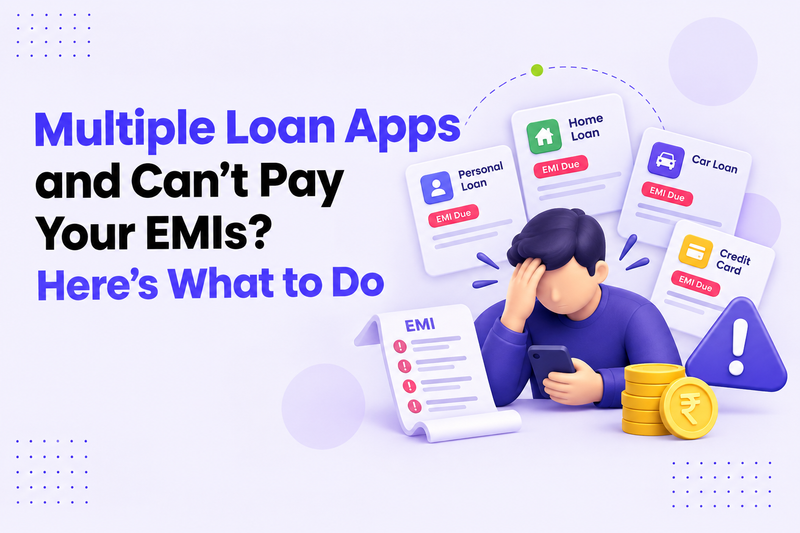
When you can't pay every EMI, don't split your money equally across all apps and don't pay whichever lender calls loudest. Pay secured loans first (they can seize an asset), then the loans that report to CIBIL and carry the highest interest, and keep the smaller unsecured ones on minimum or partial payments while you negotiate. Verify every app against the RBI's Digital Lending Apps directory, talk to each lender before you default rather than after, and never take a new loan just to pay an old one.
Think of it like hosting a big Indian wedding on a tight budget. The caterer, the band, the decorator, and the photographer all want their advance cleared the same week, and you genuinely don't have enough for everyone at once. You don't ignore any of them, but you also don't split the money equally. You pay the caterer first because if the advance doesn't land, the food doesn't show up on the day. That's exactly how EMIs across multiple loan apps should work: not "who's asking loudest," but "who can actually hurt me most if I don't pay."
Struggling to keep up with multiple loan EMIs? We can help you understand your options and talk to your lenders.
Why people end up with five loan apps instead of one
Loan apps are built for speed. Approval in minutes, no paperwork, money in your account before you've finished reading the terms. That convenience is also the trap: it's far easier to take a second or third small loan to cover the first one's EMI than it is to fix the actual shortfall. Within a few months, what started as one manageable loan turns into four or five running in parallel, each with its own due date, and no single view of what you actually owe.
How to decide who gets paid first
Not all EMIs carry the same consequence if missed. Prioritise in this order:
This is the same logic as the avalanche method used in personal finance globally, tuned to Indian realities: an asset you can lose beats a number that only grows.
Your step-by-step plan
1. List every loan on one page. App name, outstanding amount, EMI date, interest rate, and whether it's secured. You cannot prioritise what you haven't mapped out. Most people underestimate their own total EMI outgo until they write it down.
2. Verify each app is legitimate. Search the RBI's Digital Lending Apps directory (live on the RBI website since July 2025) to confirm the app is tied to a registered bank or NBFC. If an app doesn't show up there and charges rates or fees that feel abnormal, you may be dealing with an unauthorised lender, and different rules apply to how you handle it, including reporting it.
3. Call each lender before the due date, not after. A borrower who says "I can pay ₹3,000 now and the rest by the 15th" is treated very differently from one who simply stops responding. Most regulated lenders will restructure, extend, or accept a partial payment plan if you ask early.
4. Use the priority table above to allocate whatever money you do have. Full payment on the highest-priority loan, partial or minimum payment on the rest, with a clear message to each lender about when you'll catch up.
5. Never borrow from App E to pay App A. This is how a manageable shortfall becomes an unmanageable one. If you're tempted to take a new loan purely to cover an old EMI, that's the moment to stop and look at settlement or restructuring instead.
6. Ask about restructuring or a One Time Settlement on the loans you genuinely cannot service. Lenders would rather recover a reduced amount than chase a default through collections and courts.
Too many loans? We can help you map out your loans and figure out which to prioritise.
What actually happens when you miss EMIs across apps
Your credit score takes a hit with every missed payment, not just the first one. Each lender reports independently to CIBIL or CRIF, so five missed EMIs can mean five separate dents.
After 90 days of non-payment, a loan is classified as a Non-Performing Asset (NPA) under RBI norms, and recovery typically escalates from reminder calls to formal notices at that point.
Recovery calls intensify, and this is where borrowers with multiple defaulted apps often feel overwhelmed the most, since several lenders may start collection efforts around the same time.
Secured loans move toward repossession, while unsecured ones move toward legal notices and, eventually, court or Debt Recovery Tribunal action.
Your rights while you sort this out
Falling behind on multiple EMIs doesn't put you outside the law's protection. It's the opposite.
Recovery calls are restricted to 8 am to 7 pm. RBI has explicitly barred lenders and their recovery agents from calling outside this window, or using intimidation, threats, or public humiliation as tactics.
Only RBI-regulated apps can lawfully access your data or pursue formal recovery. If an app isn't in the RBI's DLA directory, its recovery tactics may themselves be illegal, and you have grounds to report it rather than simply comply.
You can request your loan agreement and Key Fact Statement (KFS) from any regulated lender, which lays out the exact interest, charges, and repayment terms you agreed to.
You can propose a settlement in writing at any stage, even after a legal notice has been issued, and most lenders will engage with a serious, documented proposal.
The bigger fix: stop juggling, start consolidating
Prioritising EMIs gets you through this month. The longer-term fix is getting off multiple parallel loan apps altogether, whether that's through a single consolidation loan, a structured settlement plan across lenders, or simply closing out the smallest loans first so your monthly obligation list gets shorter, not longer. Fewer, larger, well-tracked loans are always easier to manage than five small ones running on five different clocks.
Disclaimer: This content is for informational purposes only and does not constitute legal or financial advice.
Frequently Asked Questions
Which EMI should I pay first if I can't pay all of them?
Pay secured loans first, since the lender can seize the asset. After that, prioritise loans that report to credit bureaus and carry the highest interest, and keep smaller unsecured loans on partial payments while you negotiate.
Will missing EMIs on multiple loan apps affect my CIBIL score more than missing one?
Yes. Each lender reports independently, so multiple missed EMIs across different apps can create multiple negative entries on your credit report, not just one.
Is it safe to take a new loan app to pay off an existing one?
Not really. It temporarily hides the shortfall but adds another EMI, another due date, and often a higher effective cost, making the overall problem larger rather than solving it.
How do I check if a loan app is RBI-regulated?
Search for the app on the RBI's Digital Lending Apps directory on its official website, which lists apps linked to regulated banks and NBFCs. If it isn't listed, treat that as a red flag.
Can loan apps call me at any time to recover an EMI?
No. RBI rules restrict recovery calls to between 8 am and 7 pm and prohibit intimidation, harassment, or contacting your family and colleagues to pressure you.
Credfix
When debt feels overwhelming, we help you understand what comes next. Get practical guidance on missed EMIs, recovery calls, legal notices, settlement options, and your rights - explained simply, so you can make informed decisions.
Visit SiteEvery loan has a way out. Find yours.
Know your options. Take control.