EMI Moratorium Extension: Rules, Benefits and Risks
Skipping EMIs sounds like relief, but the interest never pauses. Here's what a moratorium really costs, and how to use it wisely...
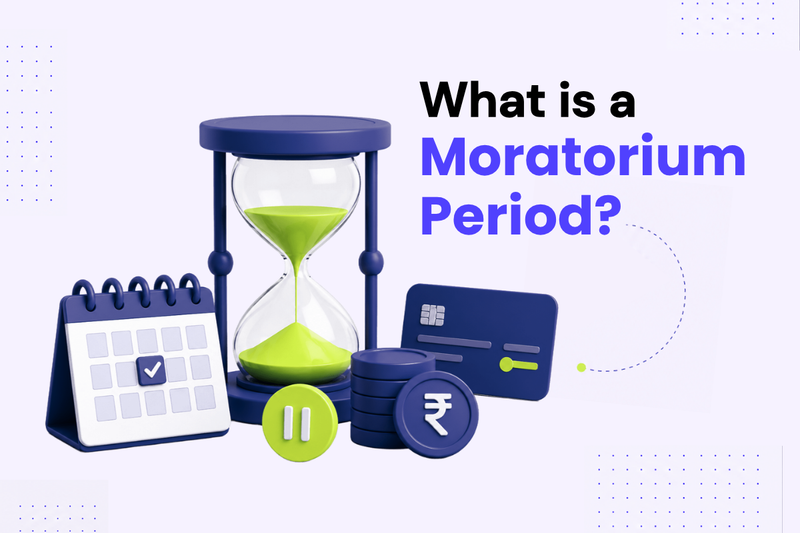
Picture a runner who twists an ankle mid-race. A good coach does not force her to keep sprinting. She is pulled aside, given time to heal, and rejoins the race once she can run properly again. A moratorium period works on the same idea, except the "race" is loan repayment and the "injury" is a temporary financial setback.
In simple terms, a moratorium period is a window during which a borrower is allowed to pause loan repayments without being marked as a defaulter. It is not a waiver. It is a pause button, and like most pause buttons, the clock underneath keeps ticking.
A moratorium isn't free relief, it's a trade-off.
Understand exactly what that trade-off looks like for your loan before you decide.
What Does Moratorium Period Actually Mean?
A moratorium period is a lender-approved gap during which the borrower is not required to pay the EMI on a loan. It can apply to a personal loan, a home loan, a business loan, or an education loan. During this gap, no payment is due, but in most cases the interest on the outstanding amount continues to accrue. Once the moratorium ends, that accumulated interest is usually added to the principal, and regular repayment resumes, often at a slightly higher EMI or a longer tenure.
Think of it less as a holiday and more as a rescheduling. The debt does not disappear. It simply steps aside for a while and comes back a little heavier.
In India, the concept became widely known in 2020, when the Reserve Bank of India (RBI) permitted banks and NBFCs to offer a moratorium on term loan instalments falling due between March 1 and May 31, 2020, in response to the financial disruption caused by COVID-19. This relief was later extended by three more months, running through August 2020, and covered term loans, working capital facilities, and credit card dues for both individuals and businesses. It is worth noting that this was an emergency, one-time regulatory measure and not a permanent feature of every loan. Outside such exceptional periods, a moratorium is typically something a borrower requests from a lender, and the lender evaluates and approves case by case.
How Is a Moratorium Different From a Grace Period?
The two terms get used loosely, but they are not identical. A grace period is usually short, a matter of days to a few weeks, and is often built into the loan structure from day one (for example, a short window after a due date before a late fee kicks in). A moratorium is typically longer, ranges from a few months to a few years, and is granted in response to a specific circumstance, such as financial hardship, a natural calamity, or, in the case of education loans, the simple fact that a student is not yet earning.
Why Do Moratorium Periods Exist?
Lenders are not in the business of handing out relief for no reason. A moratorium exists because a temporary pause protects both sides of the loan.
For the borrower, it prevents a rough financial patch, job loss, a medical emergency, a business slowdown, from spiralling into a default and a damaged credit history. For the lender, it is a way to keep an account "standard" rather than pushing a borrower who is likely to recover into default, which is costlier and harder to recover from than a short delay.
Common Situations Where a Moratorium Applies
Education loans. This is the most familiar example for Indian borrowers. The moratorium here usually covers the entire course duration plus an additional six months to a year after the course ends, giving them time to find a job before EMIs begin. Public sector banks generally follow the course-plus-six-months structure, while many private banks and NBFCs extend it to course-plus-twelve-months. Even though no EMI is due, interest keeps accruing on the disbursed amount, usually on a simple interest basis, and gets added to the principal once repayment starts. Some lenders let students pay just the interest during this window, which is worth doing if it is affordable, since it keeps the final loan amount from ballooning.
Home loans. A moratorium may be offered during the construction phase of a property, when the borrower has not yet moved in, or later, in the event of a genuine financial setback such as a lay-off. Interest continues to build on the disbursed amount either way.
Personal and business loans. Lenders sometimes approve a short moratorium, often anywhere from one to twelve months, when a borrower demonstrates real hardship, supported by documents such as medical bills, a termination letter, or business loss statements. This is discretionary, not automatic.
Systemic relief. As seen in 2020, regulators can direct an entire banking system to offer a moratorium during a widespread economic shock. This is rare and reserved for genuine national or global disruptions.
The Real Cost: Interest Doesn't Take a Break
Here is the part that catches many borrowers off guard. During a moratorium, the lender usually stops asking for a payment, but it does not stop the interest meter. Consider a straightforward comparison.
Suppose someone has an outstanding loan of ₹5,00,000 at 10% annual interest and takes a six-month moratorium. Roughly ₹25,000 in interest accrues over those six months even though no EMI was paid. That amount gets added to the principal, so once repayments resume, the borrower is essentially repaying ₹5,25,000, not ₹5,00,000, over a period that may also have been extended. Post-moratorium EMIs can therefore be higher, or the loan simply runs longer, or both, depending on how the lender restructures the schedule.
This is the trade-off a moratorium always involves: short-term breathing room for a slightly higher long-term cost. It is a legitimate tool, but not free money.
Key Benefits of a Moratorium Period
Breathing room during genuine hardship. It buys time to stabilise income, find a new job, or let a business recover, without the pressure of a monthly due date.
Credit score protection. A properly sanctioned moratorium does not get reported as a missed payment or default, so it does not hurt the borrower's credit score the way an unapproved skipped EMI would.
No penalty for non-payment. Since the lender has agreed to the pause, late fees and penal charges typically do not apply during the sanctioned window.
Structured, not chaotic. Instead of quietly missing payments and hoping for the best, a moratorium formalises the pause with clear terms on when repayment resumes.
Things to Keep in Mind Before Opting In
A moratorium should be requested, not defaulted into. Borrowers should ask the lender exactly how interest will be treated during the pause, whether the tenure will be extended or the EMI increased afterward, and whether paying just the interest during the moratorium is an option. Wherever affordable, servicing the interest portion alone during the pause is usually the smarter move, since it keeps the debt from compounding further.
The Bottom Line
A moratorium period is best understood the way the injured runner understood her time on the sidelines: necessary, protective, and temporary. It gives a borrower room to recover from a genuine setback without derailing their credit history, but it is not a discount on the loan. The interest clock keeps running, and the bill eventually comes due, usually a bit larger than before. Used deliberately, with a clear view of the cost, a moratorium can be exactly the relief it is designed to be.
If you're weighing a moratorium against other options, get a clear-eyed comparison before you request one.
Frequently Asked Questions
Does a moratorium period mean my loan interest is waived too?
No. This is the single most misunderstood part of a moratorium. Interest almost always keeps accruing on your outstanding balance during the pause, it's added to your principal once repayment resumes, so you end up repaying more than what you originally owed.
Will taking a moratorium hurt my credit score?
Not if it's formally sanctioned by your lender. A properly approved moratorium isn't reported as a missed payment or default. But quietly skipping EMIs without lender approval, hoping it counts as a pause, absolutely will damage your score.
Can I request a moratorium anytime I'm short on cash?
No, it's discretionary, not automatic. Outside rare systemic relief (like the 2020 RBI moratorium), lenders evaluate each request case by case, usually needing proof of genuine hardship like a termination letter, medical bills, or business loss documents.
Is there any way to avoid my loan getting more expensive after a moratorium?
Yes, pay just the interest during the pause, even though it's not mandatory. It stops the accrued interest from being added to your principal, which is what actually causes the post-moratorium EMI or tenure to balloon.
What's the real difference between a moratorium and simply missing my EMIs?
Everything. A moratorium is a formal agreement with clear terms on interest treatment and repayment resumption, with no penalties. Missing EMIs without approval triggers late fees, credit score damage, and can push your account toward default and NPA status.
Credfix
When debt feels overwhelming, we help you understand what comes next. Get practical guidance on missed EMIs, recovery calls, legal notices, settlement options, and your rights - explained simply, so you can make informed decisions.
Visit SiteEvery loan has a way out. Find yours.
Know your options. Take control.